- Contribute to the Future
- +90 212 803 56 66
- +90 532 514 47 62
- fatih@izgeridonusum.com.tr

Navigating E-Waste Regulations in Turkey: A Guide for Multinationals

Secure Data Destruction in Istanbul: Protecting Your Global Brand Reputation
Nisan 28, 2026
Navigating E-Waste Regulations in Turkey: A Guide for Multinationals
Operating a multinational corporation in Turkey brings significant opportunities, but it also comes with a complex set of environmental responsibilities. As Turkey aligns its domestic laws with European Union standards, the management of Electronic Waste (e-waste) has become a top priority for compliance officers and IT directors.
Failure to adhere to local regulations doesn’t just result in heavy fines; it poses a significant risk to your global brand reputation. This guide outlines the essential regulatory landscape for e-waste in Turkey and how international firms can ensure seamless compliance.
The Legal Framework: WEEE Directive (AEEE) in Turkey
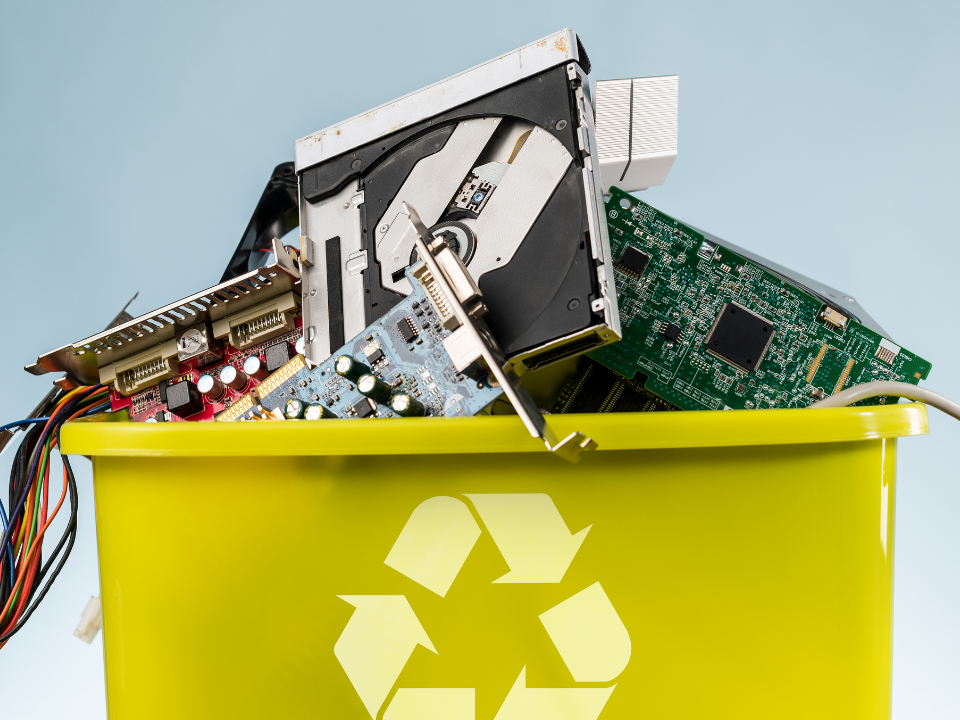
Turkey’s e-waste management is primarily governed by the “Waste Electrical and Electronic Equipment (AEEE/WEEE) Regulation”, closely modeled after EU directives. According to the Ministry of Environment, Urbanization, and Climate Change, businesses are legally obligated to ensure that their end-of-life electronics are collected, transported, and processed by licensed recycling facilities.
For a multinational firm, this means you cannot simply dispose of old laptops, servers, or networking gear through standard waste channels. Every gram of electronic waste must be documented and traced back to a certified partner.
Zero Waste (Sıfır Atık) Policy and Your Office
In recent years, Turkey has launched the “Zero Waste” (Sıfır Atık) project, a national initiative led by the government to minimize landfill waste. For corporate entities, implementing a Zero Waste system in Turkish branches is often mandatory.
Electronic waste is a critical pillar of this policy. Multinationals are expected to:
- Set up dedicated e-waste collection points within their facilities.
- Maintain records of all disposed assets for annual reporting.
- Partner with authorized recycling firms that can provide a “Zero Waste Certificate” of disposal.
Data Security: The Intersection of KVKK and E-Waste
Perhaps the most sensitive issue for international firms is data security. In Turkey, the Personal Data Protection Law (KVKK) mirrors many aspects of the European GDPR. When you retire IT assets, you aren’t just disposing of hardware; you are managing sensitive corporate and customer data.
A professional e-waste partner in Turkey must provide certified data destruction services. Simply “wiping” a drive is often not enough to meet KVKK standards. Physical shredding or degaussing, followed by a formal Certificate of Destruction, is the only way to guarantee that your global data security protocols are maintained on Turkish soil.
Why Local Partnerships Matter for Global Compliance
Logistics and legal documentation are the two biggest hurdles for foreign firms. A local, licensed partner like Katkısan Recycling bridges the gap between your global sustainability goals and Turkish legal requirements.
By choosing a specialized partner, you gain:
- Legal Peace of Mind: All documents (UATF – National Waste Transport Forms) are handled according to Turkish law.
- Sustainability Reporting: Detailed reports that contribute to your global ESG (Environmental, Social, and Governance) scores.
- Economic Efficiency: Professional assessment of your IT assets can often recover value from precious metals and reusable components, offsetting disposal costs.
Conclusion: Lead with Sustainability
For a multinational corporation, e-waste management in Turkey should not be viewed as a chore, but as an opportunity to demonstrate commitment to the Circular Economy. By navigating these regulations with a professional local partner, you protect your company from legal liability, secure your data, and contribute to a greener future in the Turkish market.
Frequently Asked Questions (FAQ)
- Is it mandatory for foreign companies in Turkey to recycle e-waste?
Yes. Under the AEEE regulation, all businesses operating in Turkey are responsible for the legal disposal of their electronic waste through licensed facilities. - Can we use our global recycling partner in Turkey?
Only if they hold a valid license from the Turkish Ministry of Environment. Most global firms prefer to partner with a specialized local recycler who understands the domestic paperwork and logistical requirements. - Does Katkısan provide data destruction certificates?
Yes. Katkısan provides official certificates of destruction that comply with both KVKK and international data security standards.